If you’re shopping for a used car in the United States, you’ve probably heard one recommendation over and over again:
“Check the Carfax report before you buy.”
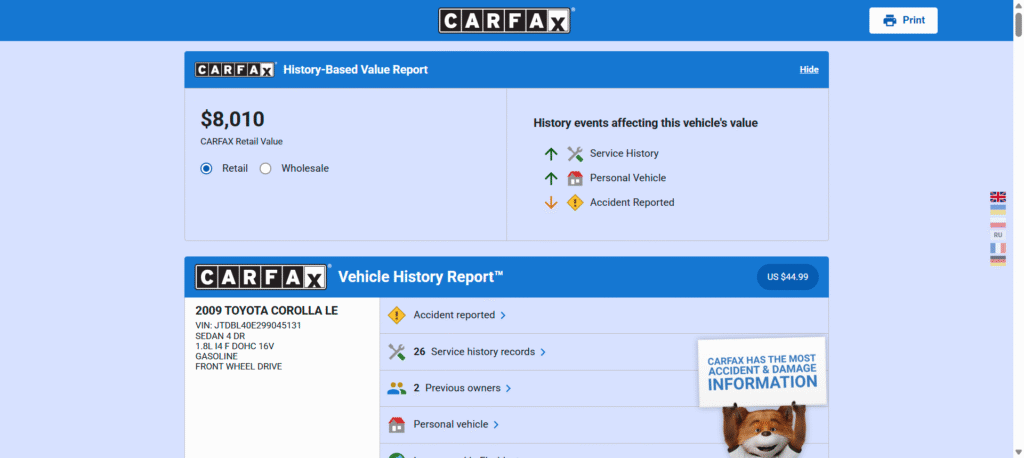
There’s just one problem—many buyers quickly discover that a Carfax report can cost $40–$45, and dealers often purchase discounted bulk packages that regular buyers can’t access. This raises a question millions of Americans Google every month:
👉 Is there such a thing as a cheap Carfax report?
And if yes—why don’t car dealers want you to know about it?
This guide breaks everything down with real examples, expert advice, step-by-step instructions, and the best ways U.S. buyers can avoid overpaying.
Why Carfax Became the “Gold Standard” for Used Cars
A traditional Carfax report pulls data from thousands of U.S. sources:
- DMV records
- Insurance companies
- Police accident reports
- Service centers
- Auctions (Copart, IAAI, Manheim)
- Title brands (Salvage, Rebuilt, Flood, Lemon, Odometer Rollback, etc.)
Dealers rely heavily on Carfax because it builds trust and helps justify pricing. A clean Carfax can raise a car’s value by thousands, and a bad one can ruin a sale instantly.
But here’s what most private buyers don’t realize…
What Dealers Don’t Want You to Know
1. Dealers get Carfax reports extremely cheap
A dealership buying 100+ cars a month can access bulk packages where a Carfax report costs as little as $2.99.
Meanwhile, a regular buyer pays $40+ for a single lookup.
This is why dealerships push Carfax so aggressively—they use it as a sales tool, not a cost.
2. Carfax does not show everything
Based on real cases from U.S. buyers:
- A vehicle had two unreported accidents because insurance wasn’t involved.
- Flood cars from Florida showed no flood brand until weeks after purchase.
- A dealer repainted half the car, but the Carfax report still showed “No Damage Reported.”
Carfax is good, but it is not perfect—and that’s exactly why budget-conscious buyers often search for a cheap Carfax or a Carfax alternative.
3. Accurate VIN history does not have to cost $40+
Most Americans overpay simply because they don’t know alternatives exist.
Your goal isn’t to pay for a brand name—
👉 Your goal is to get the most accurate vehicle history for the lowest price.
Is a Cheap Carfax Report Possible?
Yes—but not directly from Carfax.com.
Carfax does not officially sell “cheap” reports to consumers, but several platforms legally access the same VIN databases and offer significantly lower prices.
For example, many independent services provide Carfax-style data for as low as $2.99–$9.99, which is up to 85% cheaper.
These services exist because they purchase aggregated bulk data and provide simplified versions of a Carfax report.
Cheap Carfax vs. Carfax Alternative — What’s the Difference?
Cheap Carfax
A lower-cost method of getting similar vehicle history. Sometimes the condensed report still includes:
- Title history
- Odometer checks
- Accident records
- Auction photos
- Damage descriptions
- Insurance totals
Carfax Alternative
A platform that is not Carfax but provides nearly identical or additional vehicle history details at a lower price.
Examples of what a good alternative might include:
- Real auction photos (Copart/IAAI)
- Damage codes
- Rebuild history
- Ownership type (Fleet, Rental, Commercial)
- Market value analysis
Many buyers argue that alternatives sometimes show more than Carfax itself.
Step-by-Step: How U.S. Buyers Can Check a Car’s History Without Overpaying
This simple guide works whether you’re buying from Facebook Marketplace, Craigslist, CarMax, Vroom, Carvana, or a private seller.
Step 1 — Get the VIN number
The VIN is usually found:
- On the windshield
- Driver’s door frame
- Registration
- Insurance card
- Seller’s listing
If the seller refuses to give the VIN—walk away.
Step 2 — Run a cheap carfax alternative first
Before paying $40+ for a Carfax report, check a low-cost history provider.
A $2.99–$9.99 lookup often reveals:
- Auction history
- Real mileage
- Total loss events
- Export/import flags
- Salvage title origins
If the alternative shows major damage, you just saved money.
Step 3 — Only buy a Carfax report if necessary
If the car looks good based on the alternative:
- Confirm clean title
- Verify consistent odometer readings
- Check for major accidents
- Compare state title brands
Only then decide whether it’s worth paying full price for a branded Carfax report.
This strategy alone saves many U.S. buyers $30–$50 per car.
Real Example: How a Cheap Carfax Saved a Buyer From a $12,000 Loss
A buyer from Texas shared this story:
He found a 2018 F-150 listed for an attractive price. The dealer claimed the truck had one owner, no accidents, and offered a printed Carfax summary—not the full report.
Before trusting the dealer, the buyer ran a $2.99 VIN check.
What it revealed:
- The truck appeared in a Copart auction
- Classified as “Salvage – Collision”
- Had photos showing major front-end damage
- Title was later rebuilt in another state
The dealership’s “summary” conveniently omitted that information.
Without a cheap carfax-style lookup, the buyer would have purchased a vehicle worth $12,000 less than advertised.
Pros and Cons of Cheap Carfax Alternatives
Pros
- Very low cost ($2.99–$9.99)
- Often includes auction photos Carfax does not show
- Easy to run multiple VINs during car shopping
- Helps filter bad cars quickly
- More accessible for private buyers
Cons
- Some services provide limited data
- Not all alternatives access the same sources
- You must choose a reputable provider
- Not ideal as the only verification for expensive vehicles
Conclusion
A cheap carfax absolutely exists—but not in the way most Americans expect. Carfax is an excellent tool, yet buyers often do not need to spend $40+ to get accurate and useful vehicle history information.
The smart approach is simple:
👉 Use a cheap Carfax alternative first to filter out bad cars.
👉 Only buy a full Carfax report if the vehicle passes initial checks.
By doing this, you save money, avoid scams, and dramatically reduce the risk of buying a car with hidden damage.
If you’re purchasing a U.S.-market Audi, Ford, Toyota, Honda, or any other used vehicle, start with a $2.99 VIN history lookup at:
➡ checkyourcar.net — fast, affordable, and ideal before buying any American vehicle.
FAQ
1. Is there a way to get a cheap Carfax report?
Yes. While Carfax does not sell discounted reports directly to consumers, several platforms offer low-cost VIN checks with similar data for as little as $2.99.
2. Are cheap Carfax alternatives accurate?
Reputable providers use the same U.S. data sources as Carfax. Many even include auction photos that Carfax does not show.
3. Why are Carfax reports expensive?
Carfax sells brand recognition and convenience. Dealers buy bulk packages cheaply, while private buyers pay full price.
4. Should I trust a dealer’s Carfax report?
Never blindly. Always verify with a secondary VIN check. Some dealers provide incomplete summaries or outdated reports.
5. What’s the best strategy to save money on vehicle history reports?
Run a cheap carfax alternative first, then purchase a full Carfax only if the car looks promising.
6. Is a Carfax alternative enough for buying a car?
For initial screening—yes. For final confirmation of an expensive purchase, combining both reports gives the safest results.
7. Does a cheap Carfax report work for imported U.S. vehicles?
Yes. Most alternatives support U.S. VIN formats and show America-based auction history.